Our Position
The Case for Principled Non-Participation
Electoral abstention is not apathy. It is a reasoned refusal to legitimize systems that have ceased to represent the governed.
About voting.
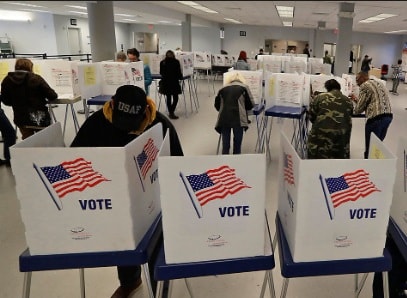
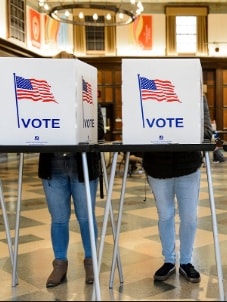
The dominant political culture treats voting as a civic sacrament — the minimum expression of democratic participation, the one act that confers legitimacy on whatever follows. To abstain is to be cast as indifferent, irresponsible, or complicit in outcomes one did not choose. We reject this framing entirely.
Non-participation is not silence. It is a statement. When the available choices are structurally constrained to serve the same interests regardless of which party prevails, the act of choosing between them is not democracy — it is the performance of democracy. That, coupled with the mindset of not buying stuff you don;t need etc.... makes for something that the global elite will hopefully see as the masses putting a halt to their "machine".
The Intellectual Case
Consent and Legitimacy
Democratic theory holds that government derives its just powers from the consent of the governed. Voting is routinely invoked as the mechanism of that consent. But consent requires meaningful alternatives. When structural conditions — campaign finance, media consolidation, ballot access laws, gerrymandering — systematically narrow the field to two parties whose core economic commitments are indistinguishable, the ballot offers the form of choice without its substance. Casting a vote under these conditions does not express consent; it manufactures it.
The Spoiler Fallacy
The most common objection to non-participation is the lesser-evil argument: even if neither candidate is acceptable, one is worse, and abstaining helps the worse one win. This argument has a surface plausibility that dissolves under scrutiny. It assumes the two-party duopoly is a fixed feature of political reality rather than a contingent outcome of specific institutional choices. It demands perpetual participation in a system that uses that participation to justify its own continuation.
The Ratchet Effect
Political scientists have documented what activists have long observed: each electoral cycle, the acceptable range of policy debate shifts incrementally in one direction. Parties that once represented labor, civil liberties, or anti-war positions have abandoned those commitments while retaining their voters through fear of the alternative. Non-participation breaks this ratchet.
Where Change Actually Happens
The historical record of transformative political change is not primarily a record of electoral victories. The abolition of slavery, the eight-hour workday, women's suffrage, civil rights, the end of colonial rule — these were achieved through sustained extra-electoral pressure: strikes, boycotts, civil disobedience, community organizing, and the credible threat of social disruption. Electoral politics followed these movements; it did not lead them.
The Visibility of Abstention
A vote cast for a losing candidate disappears into the aggregate. A sustained, organized, principled non-participation — one that names itself, explains its reasoning, and builds alternative institutions — is legible as a political act. It cannot be absorbed by either party. It cannot be claimed as a mandate. It stands as a refusal.
The State can't control the revolution through anything it would do to us or get us to do because the revolution is right where we want it: Out of our control!